


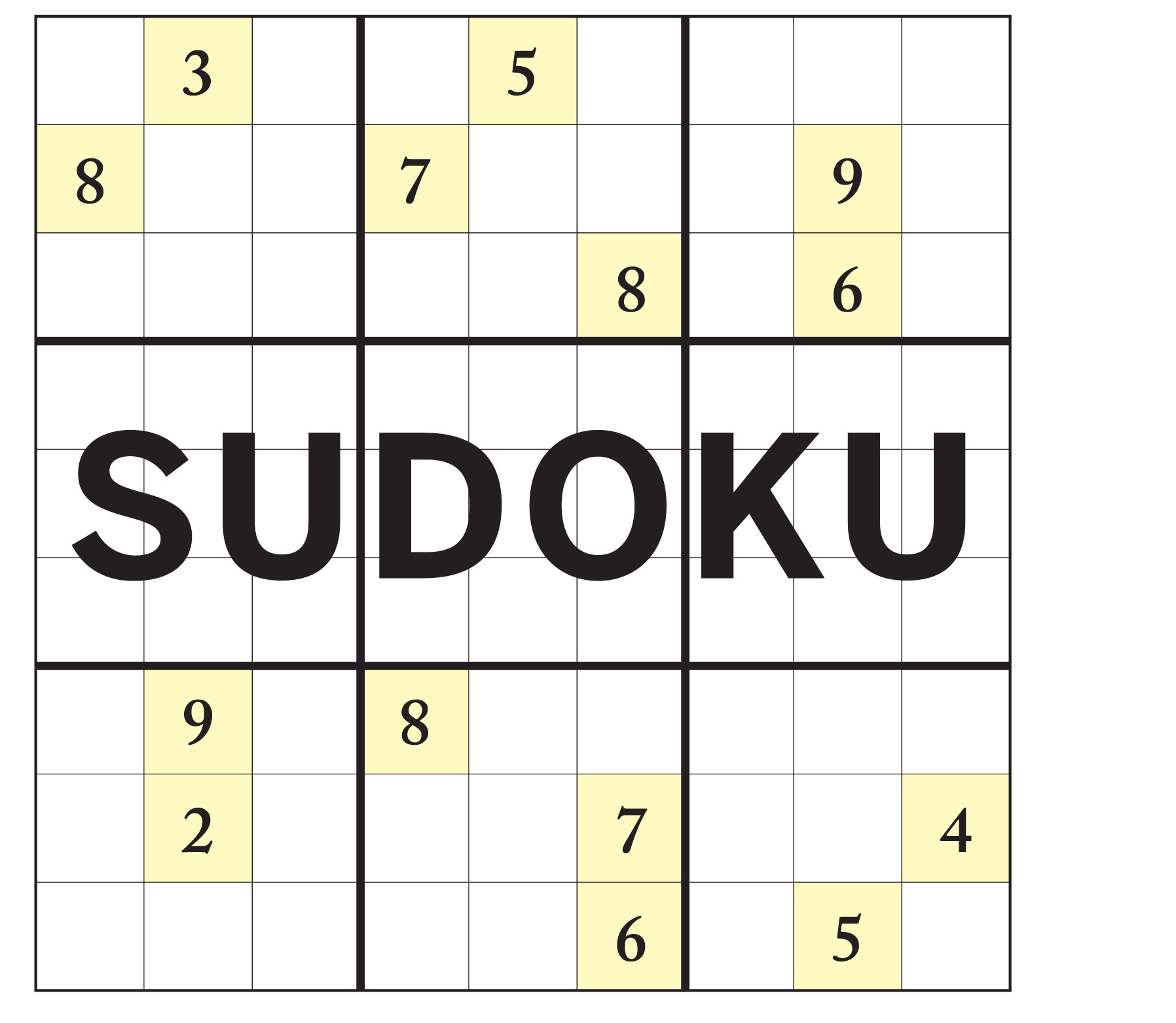
Sudoku is a logic-based puzzle that has gained worldwide popularity, commonly appearing in newspapers, mobile apps, and various brain-training platforms. With simple yet challenging rules, Sudoku requires players to fill in numbers from 1 to 9 in a grid so that no number repeats in any row, column, or 3×3 subgrid.
Because of its strong emphasis on logic and reasoning, many people ask: Can Sudoku be used in IQ interviews? This is an intriguing question, especially as companies increasingly prioritize evaluating candidates’ cognitive abilities.
What skills does Sudoku assess?
To determine whether Sudoku is suitable for IQ interviews, we need to understand what abilities it actually measures:
Logical reasoning
Sudoku requires players to analyze given data and use deduction to arrive at the correct solution. This is a core component of many IQ tests.
Concentration
Solving a difficult Sudoku puzzle demands intense focus to avoid mistakes at each step.
Problem-solving skills
Players must continuously test possibilities, eliminate options, and adjust their strategies—similar to tackling real-world problems.
Patience and discipline
Sudoku is not a game of chance; it requires persistence and a systematic approach.
Is Sudoku suitable for IQ interviews?
Advantages
- Easy to implement: No complex equipment is needed—just paper or a simple app.
- Quick insight into logical thinking: Recruiters can observe how candidates approach a problem.
- Accessible to many candidates: It does not require specialized knowledge.
Limitations
- Does not fully reflect IQ: IQ includes various dimensions such as language, memory, and spatial reasoning, while Sudoku mainly measures logic.
- Experience-dependent: Candidates familiar with Sudoku may have an advantage, even if their overall IQ is not higher.
- Lack of standardization: Unlike formal IQ tests, Sudoku does not have an internationally standardized scoring system.
When should Sudoku be used in interviews?
Sudoku can be useful in certain situations:
- When interviewing for roles that require strong logical thinking (e.g., IT, data analysis, engineering)
- When evaluating the candidate’s problem-solving approach rather than just the final answer
- As a supplementary test, not a primary assessment tool
For example, a recruiter might ask a candidate to solve a simple Sudoku puzzle and explain their reasoning process.
Sudoku can be used in IQ interviews, but it should not be the sole assessment tool. It is effective for quickly evaluating logical thinking and problem-solving approaches, but it cannot replace comprehensive, standardized IQ tests.
When used appropriately, Sudoku can be an engaging tool that helps employers better understand how candidates think, something many traditional assessments struggle to reveal.
For a hands-on experience, you can try solving puzzles directly at the Game Sudoku Online
