


In modern education, developing students’ thinking abilities and soft skills has become increasingly important. Alongside traditional activities, many intellectual games are now considered effective learning tools. One of these is Sudoku— a familiar number puzzle that often appears in newspapers, puzzle books, and mobile applications. This raises an interesting question: should Sudoku be included in life skills education programs?
What is Sudoku?
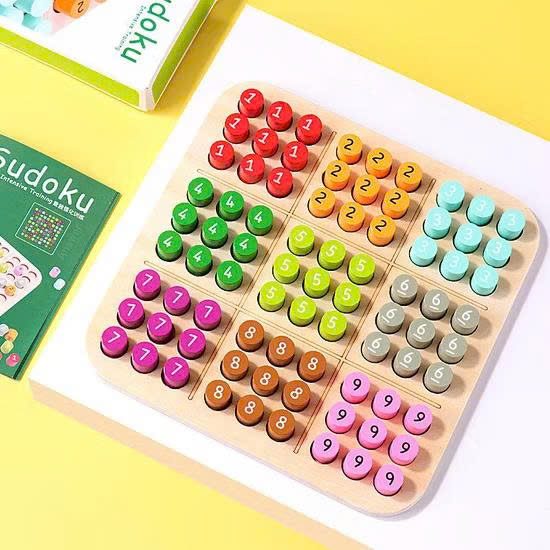
Sudoku is a logic-based puzzle game. Players must fill the numbers from 1 to 9 into a 9×9 grid so that no number repeats in any row, column, or 3×3 subgrid. The game does not require complex calculations; instead, it relies mainly on reasoning, observation, and elimination.
For this reason, Sudoku is often regarded as a simple yet effective brain-training exercise.
The benefits of Sudoku for life skills
When students play Sudoku regularly, they have the opportunity to develop several important skills. First of all, it strengthens logical thinking. To solve a Sudoku puzzle, players must analyze the given information, make step-by-step deductions, and verify their results. This process helps build a habit of structured thinking, which is very useful in both academic learning and real-life problem solving.
In addition, Sudoku can improve concentration. Players must pay close attention to each cell and avoid small mistakes that could ruin the entire puzzle. The patience required to find the correct solution also helps develop calmness and perseverance.
Moreover, this game can enhance memory and observation skills. While solving puzzles, players often need to remember possible numbers and track multiple positions within the grid. This keeps the brain active and encourages more flexible thinking.
Points to consider
Despite its benefits, Sudoku also has some limitations if it is directly incorporated into a life skills curriculum. It is primarily an individual activity, so it offers fewer opportunities for communication or collaboration among students. However, life skills education usually places strong emphasis on teamwork and social interaction.
Furthermore, if students are simply asked to solve Sudoku puzzles repeatedly, the activity may become monotonous. Therefore, the way it is organized and guided plays a very important role.
Should Sudoku be included in life skills programs?
In practice, Sudoku can certainly be used as a supportive tool in life skills education. The game helps develop logical thinking, concentration, and patience— qualities that are essential for long-term learning.
However, Sudoku should be used as a supplementary activity rather than the core content of the program. When combined with formats such as puzzle-solving competitions, group activities, or intellectual clubs, the game can become more engaging and deliver greater educational value.
Sudoku is a simple game but one that offers meaningful benefits for mental development. When applied appropriately, it can support the development of thinking skills and concentration habits among students. Therefore, including Sudoku in life skills education is feasible, as long as it is designed flexibly and aligned with educational goals.
